
Product
Editorial
January 2026

A warm, tactile archive of CRT televisions, worn dials and phosphor glow—photographed as useful objects with personality, not dusty props waiting for a nostalgia filter.


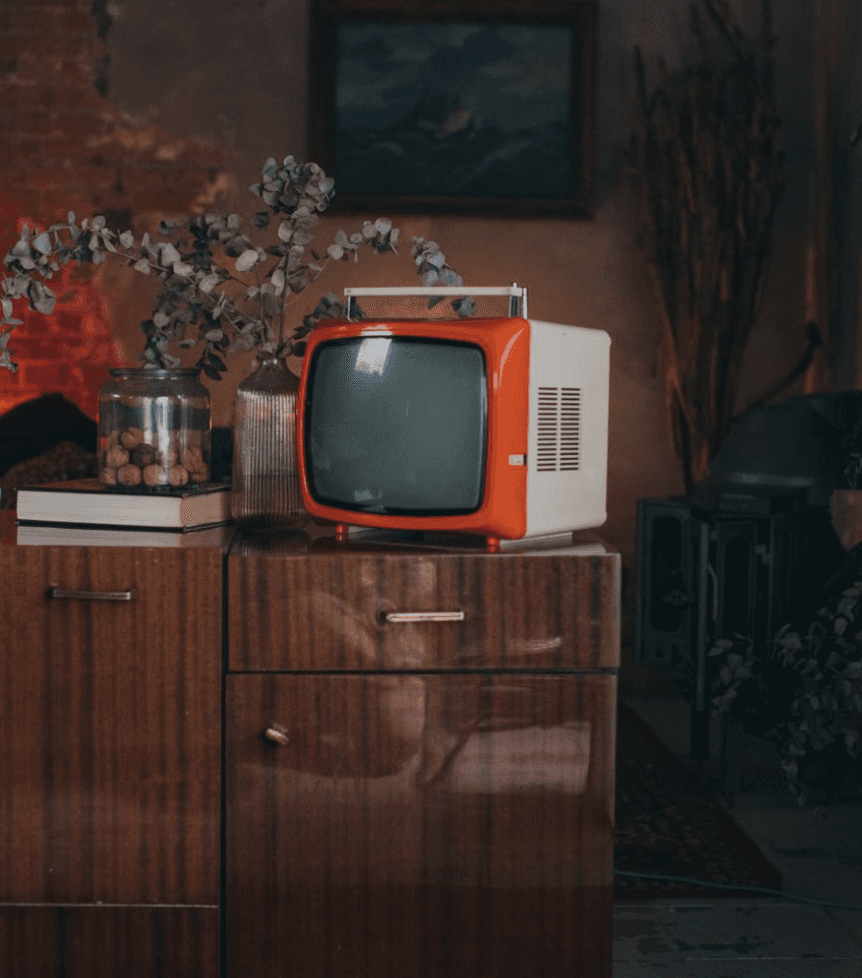


When the screen was part of the furniture
Static Archive wanted its television collection photographed with the warmth of a lived-in room and the clarity of a proper catalog. We built small environments around the sets - shelves, plants, clocks and worn wood - then made sure the controls, casing and screen character remained easy to study.
Photographing light that flickers back
CRT screens and reflective glass do not politely cooperate with a camera. Shutter speeds were tested against each refresh pattern, while flags controlled reflections without removing every sign of the room. Detail frames focused on dials, speaker cloth and softened plastic edges; wider scenes showed how naturally these machines once occupied domestic space.
The archive edit includes
Room-scale compositions showing stacked sets and domestic display environments
Close studies of UHF/VHF controls, vents, handles and age-worn materials
Screen-on photographs preserving the imperfect color and glow of working CRTs
The result is useful enough for an archive and warm enough for an editorial. The televisions look carefully preserved, but not embalmed - which is a surprisingly important distinction when the subject has this many knobs.